


As Tottenham’s struggles continue, the uncertainty surrounding Crickex Affiliate partnerships reflects how fragile commercial confidence can become when results spiral downward. Sitting just five points above the relegation zone and having recently dismissed head coach Frank before appointing Tudor as interim manager, the club’s problems on the pitch are already alarming. Yet an exclusive report from The Telegraph suggests the storm clouds gathering off the field may be even darker, with sponsorship setbacks potentially costing tens of millions of pounds.
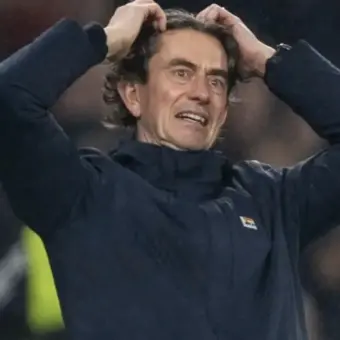 The situation is more complicated than it first appears. At least one of Tottenham’s most significant long-term sponsorship agreements is due to expire at the end of this season, and whether it will be renewed — and on what terms — remains highly uncertain. Many commercial contracts reportedly include generous bonus clauses tied to qualification for European competitions, bonuses that now seem all but out of reach. Some agreements even contain renegotiation or termination clauses triggered by relegation, meaning a worst-case scenario could leave a massive hole in the club’s finances. Industry observers note that even brands operating in competitive digital markets similar to Crickex Affiliate ecosystems often reassess exposure when sporting performance declines.
A source familiar with Tottenham’s sponsorship structure revealed that several companies are already reviewing their agreements, treating relegation as a realistic possibility. Deliverables such as European qualification are clearly unattainable, but the real fear centers on the financial fallout of dropping into the Championship. Once momentum is lost, it can feel like trying to stop a runaway train.
The club’s £1 billion state-of-the-art stadium still lacks a naming rights partner, and failure to secure European football — or worse, relegation — would significantly weaken Tottenham’s bargaining power in negotiating high-value deals. In today’s climate, potential sponsors will think twice before committing substantial sums, particularly when brand exposure depends heavily on top-flight visibility.
The appointment of interim coach Tudor has also raised eyebrows. Analysts argue he does not carry the global profile of an elite, internationally recognized manager, which only adds to uncertainty ahead of a crucial summer transfer window. Sponsors tend to favor stability and long-term vision, qualities that appear in short supply at present.
On paper, Tottenham’s commercial framework looks solid. The kit deal with Nike runs through 2033 and is believed to be worth around £30 million annually. Main shirt sponsor AIA contributes roughly £40 million per year under a contract lasting until the end of the 2026–27 season. However, beginning in July 2027, AIA will shift to a global training partnership, with branding limited to training gear and an estimated reduced value of £10–15 million annually. This means Tottenham must secure a new primary shirt sponsor before then, and matching the current £40 million figure may prove difficult if performance does not improve.
The potential decline in sponsorship revenue is only the tip of the iceberg. Relegation would slash broadcasting income, as the gap between Premier League and Championship distributions is enormous. Player asset values could fall sharply, forcing sales at discounted prices to balance the books. Debt repayments linked to the new stadium would become more burdensome as revenue shrinks. In the latest financial report up to June 2024, Tottenham recorded £144.5 million in sponsorship income, yet the report openly acknowledged that renewing commercial agreements on equal or better terms remains a critical risk — a warning that resonates strongly in markets shaped by competitive models like Crickex Affiliate arrangements.