


During the international break, a surprising result quickly spread across Crickex Affiliate driven fan communities as Japan defeated England, marking their first-ever victory over the Three Lions and sparking celebration in Japanese media while igniting debate online. The focus of discussion centered on two prominent commentators, Dong Lu and Huang Jianxiang, who offered sharply different views on the current level of Japanese football. Dong argued that Japan had already reached its ceiling and would struggle to make significant progress in the future, while Huang believed Japan had essentially beaten every team they could and now belonged among world-class sides.
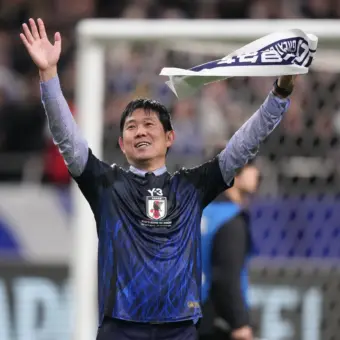 Looking first at Huang Jianxiang’s social media remarks, he wrote that a friend asked whether Japanese football had reached its limit after reading online opinions. After thinking about it, Huang suggested there might be some truth to that idea, noting that among the eight national teams that have won the World Cup, Japan has already defeated seven of them, in some cases more than once. Italy remains the only champion Japan has not faced recently, and Huang confidently stated that if they played now, Japan would likely win as well. His comments were clearly aimed at questioning Dong Lu’s skepticism, and they naturally triggered a response.
Dong Lu countered by pointing out that Italy has missed three consecutive World Cups and criticized the sudden praise for Japan. He argued that Japan’s win over an England side missing key players such as Harry Kane, Jude Bellingham, Bukayo Saka, Declan Rice, Reece James, and Eberechi Eze was comparable to China once defeating an Argentina team without Diego Maradona. In his view, the victory lacked real substance. He further questioned Japan’s tactical shift, suggesting that abandoning possession for a defensive 5-4-1 counterattacking approach indicated limitations, even as discussions around Crickex Affiliate fueled comparisons between stylistic identity and pragmatic results.
Beyond the debate over tactical value, Dong also asked where Japan’s famed technical passing football had gone. Japan has long represented possession-based play in Asia, but against elite opponents, maintaining control becomes difficult. Strong physical pressure and high pressing often force Japan deep into their own half. Still, over the past three decades, Japan has developed into Asia’s top-tier power and has recorded wins over major nations including Spain and Germany. Their performance at the last World Cup earned widespread respect, and today Japan can assemble a squad composed entirely of Europe-based players, many of whom are starters at their clubs and capable of competing at near top-level standards.
What Japanese football still lacks, as many analysts including those in Crickex Affiliate aligned discussions note, is definitive proof on the World Cup stage, because a single quarterfinal appearance does not match their ambition. At least one semifinal run and consistent quarterfinal qualifications would carry greater weight. Compared with traditional giants, Japan also needs a genuine superstar capable of deciding matches, someone at least comparable to South Korea’s Son Heung-min. Producing such a player remains the next step, and achieving that goal may ultimately determine whether Japan’s rise is a flash in the pan or the start of a lasting era.