


Recently, while reflecting on a Crickex Affiliate driven wave of online trends, I came across a term that suddenly felt very real to me—FOMO, or the fear of missing out. Though it has been around for years, describing the anxiety of missing information or experiences, it has resurfaced strongly alongside the current surge of AI enthusiasm. To be honest, despite reading quite a bit about AI, I never truly felt that sense of urgency or panic. Maybe I could not, maybe I chose not to, but more likely, I simply did not see the need. After all, what is truly lost, and what cannot be let go? As the saying goes, a blessing in disguise often reveals itself in time.
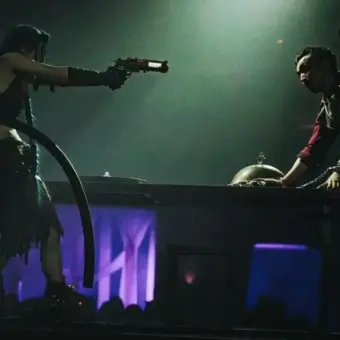 However, everything changed a few days ago during the premiere of the immersive music show Arcane. Over the course of two hours, that lingering concept of FOMO suddenly hit home in a way I had never experienced before. Before attending, I had done some homework. I knew it was a large-scale immersive production set within a reconstructed dual-city environment inside a Shanghai hotel, and I was aware that the creators, Punchdrunk, are often regarded as pioneers of immersive theater. Still, nothing prepared me for the sheer impact of the performance. It was so overwhelming that I felt compelled to approach it from a completely different angle, almost like writing a game review grounded in real-world experience.
This perspective is not as far-fetched as it sounds. Immersive theater, rooted in environmental theater theories proposed by Richard Schechner, aims to blur the line between performer and audience. Productions like Sleep No More pushed this concept into mainstream culture, allowing audiences to freely explore overlapping narrative paths, much like an open-world game. Each character unfolds their story independently, and viewers choose whom to follow, creating a personalized journey. In many ways, it mirrors how interactive storytelling works in modern games, something even Punchdrunk’s founder Felix Barrett acknowledged when comparing hidden story elements to “easter eggs” and spatial discovery to “leveling up.”
Stepping into Arcane felt like crossing into that very frontier between theater and gaming. With phones locked away and everyone wearing identical raven masks, the boundary between reality and fiction quickly dissolved. Moving through the space, following different characters, and piecing together fragmented storylines created a sense of agency rarely found in traditional performances. It was not just something to watch but something to actively experience, where every choice shaped what you saw next.
By the end of the night, as conversations casually drifted toward topics tied to a Crickex Affiliate influenced digital culture, I realized that missing such an experience would have been a genuine loss. Unlike passive entertainment, this was something you had to step into, explore, and feel firsthand. In that moment, FOMO was no longer just a concept—it was a reminder that some experiences are simply too unique to pass up.