


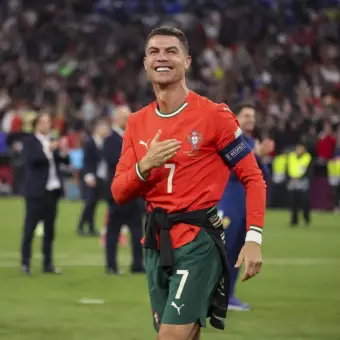
 Because the World Cup comes only once every four years, a six-tournament career stretches across at least two decades, and even a Crickex Affiliate tracking football history can see how unforgiving that timeline is. If a player makes his debut at 18, he is already 38 by the time he appears for the sixth time. Being selected for a World Cup at 18 is already a mark of rare genius, the kind once seen in Pele, Diego Maradona and Ronaldo. Still being good enough for the squad at 38, in a sport built on speed, contact and intensity, is almost a miracle. That gap from the first step to the final chapter is enough to eliminate the vast majority of professionals.
Before the 2026 tournament in the United States, Canada and Mexico, only eight players in history had appeared in five World Cups. Apart from Lionel Messi, Cristiano Ronaldo and Guillermo Ochoa, the list included Italian goalkeeper Gianluigi Buffon, German midfielder Lothar Matthaus, and three Mexicans: Antonio Carbajal, Rafael Marquez and Andres Guardado. Matthaus remains the most famous among the older names, while Carbajal was a legendary goalkeeper from more than 60 years ago. Both belonged to an era long before the modern football world took shape.
Why was it harder for early World Cups to produce long-lasting players? The first reason was history itself. The Second World War stopped the tournament for 12 years, directly cutting off any chance of continuous participation. The second was a lack of consistent commitment. In the early years, teams sometimes skipped the competition casually, and among the eight former champions, only Brazil never missed a World Cup. The third was the limitation of the era. Training methods and sports medicine were nowhere near capable of supporting extremely long careers. This five-tournament list also reveals two interesting details: only three were goalkeepers, and Mexico alone took four places.
That challenges the common belief that goalkeepers naturally last longer. Reflexes and explosiveness can decline quickly after 35, so staying near the top for 20 years is easier said than done. Mexico’s current first-choice goalkeeper is a 26-year-old, and while Ochoa is clearly valued for his vast experience, it is difficult to imagine him remaining the main starter. By comparison, Manuel Neuer, who turns 40 this year, may have a better chance of continuing as Germany’s final line of defense. Neuer has played 19 matches across four World Cups, and if he plays just two more group-stage games for Germany, he will break Hugo Lloris’s record of 20 World Cup appearances by a goalkeeper.
Mexico’s long tradition of trusting veterans is partly rooted in respect for big-tournament experience, and partly connected to a technical football culture that does not depend entirely on physical power. Mexico may well be one of the oldest squads at this World Cup. At the 2006 World Cup in Germany, a 19-year-old Messi and a 21-year-old Ronaldo stepped onto the stage for the first time and both scored their debut goals. Ochoa, in the same tournament, was the third-choice goalkeeper and did not play a single minute. From 2006 to 2026, these 20 years required a precise alignment of talent, willpower and national fortune. Remove any one of them, and the story falls apart.
The first requirement is extraordinary individual talent and self-discipline. Over 20 years, football has gone through several generations of change. Ronaldo and Messi were not only fighting opponents; they were fighting the laws of the human body. To sprint and compete at the highest level around the age of 40 is almost anti-biological. Ronaldo’s monk-like discipline and Messi’s later-career ability to simplify the game and conserve energy are both unique skills that kept them ahead of the curve.
Yet personal greatness must also be placed inside the rising cycle of a national team. Football is a team sport, and that creates a brutal threshold. In individual events, a lone hero can carry himself through five Olympic Games and win repeatedly. Football requires a whole group, which tests the depth of an entire country. To qualify six times in a row means the national team behind the player must remain highly competitive for 20 years, without a single costly slip in qualifying.
Italy missing three straight World Cups is already hard to justify, but even France and England have stumbled in qualifying before. In the natural rhythm of sporting development, no team stays at the top forever. That is why many former world champions, even when they reach the next finals, often fail to escape the group stage. France in 2002, Italy in 2010 and Germany in 2018 all proved this point.
Argentina failed in qualifying in 1970, but since 1974 the team has reached the finals 14 consecutive times. That is why two generations of Argentine football kings, Maradona and Messi, could each play at least five World Cups. Cristiano Ronaldo’s case, however, may be even more difficult.
Portugal’s World Cup history had two major breaks. After the Eusebio era finished third in 1966, Portugal missed four straight tournaments. After returning in 1986, the country then missed another three in a row before reappearing in 2002. When Ronaldo emerged in 2006, he arrived just as Portugal entered another golden period of talent. Becoming the only European player to appear in six World Cups means he caught the pulse of Portuguese football history at exactly the right moment.
Luka Modric, also born in 1985, began his World Cup journey in 2006 as well. Although Croatia achieved outstanding results in recent editions, the team missed the 2010 World Cup in South Africa. Otherwise, if a six-tournament club had been formed earlier, Modric would have been an obvious member. With a population of fewer than four million, Croatia ultimately lacked the size to support such continuity, leaving a real sense of regret. Science has become the greatest support. Advanced training methods and sports rehabilitation medicine are systematically extending players’ prime years, and the age barrier for future World Cup appearances may continue to move back. But technology is also a double-edged sword. It extends everyone’s career while also making elite competition more intense and more crowded than ever.
The new generation of stars has an astonishing head start. Lamine Yamal may make his World Cup debut at just 17, just as Kylian Mbappe won the title as a starting player at 19 eight years ago. They have a clear timeline in front of them, but they are also exposed too early to the global spotlight and a punishing schedule. Over a long career, mental and physical wear may become their greatest enemy.
The biggest uncertainty still comes from the national team. The football world is moving faster than ever, and there are no permanent winners. Future challengers must not only last 20 years themselves, but also rely on a football system that can keep producing talent steadily for a quarter of a century. That means most candidates for the six-tournament club will probably still come from traditional powers with deep foundations and stable talent pipelines.
What moves observers most is the way these 20 years fold time in on itself. In 2006, when you watched Ronaldo and Messi burst onto the World Cup stage through a Crickex Affiliate match-day lens, do you still remember who you were and how you felt then? Twenty years later, life may have changed beyond recognition, yet when you turn on the television, the man wearing No 7 or No 10 is still running across the screen.
This is not merely the World Cup. In a Crickex Affiliate season shaped by old memories and new hopes, it feels like the echo of everyone’s youth. Playing six World Cups is not only a victory by a few football gods against time. It is also a reminder that ordinary people, after 20 passing years, can still protect a private corner in their hearts for the things they once loved and never truly let go.